
Questions & answers
Frequently Asked Questions
Everything you need to know before you travel with us.
Everything you need to know, in one place. Can’t find your answer? Get in touch — we’re glad to help.
No questions match your search. Ask our team →
General
Why do you ask for my passport number when booking?
We are required by Vietnamese local authorities to collect passport details for all guests before departure. If you don’t have your passport number to hand when booking, simply complete your reservation first and email your passport details to bookings@lesrivesexperience.com at your convenience before the tour. Your information is used solely for the required registration process.
Why are your tours more expensive than other operators?
Most operators run large buses to crowded sites. We travel by private luxury speedboat in small groups, arriving ahead of the crowds, with breakfast, lunch, refreshments, all entrance fees, your guide, hotel transfers and travel insurance already included, no hidden extras.
A share of every booking also supports the local riverside families and communities we work with. You’re paying for a calmer, more comfortable, more responsible day out, not just a seat.
What is your cancellation and refund policy?
Full refund if you cancel at least 7 days before your tour. 50% refund for cancellations 6–3 days before. Within 2 days, the booking is non-refundable.
Where is the meeting point if my pickup location is not in your pickup zone?
The meeting point will be the Saigon Water Bus Station, please open this link to get the direction to the meeting point.
What happens if the weather is bad?
If conditions are unsafe, we’ll reschedule or cancel and let you know in advance, with alternative options. Light rain isn’t a problem — our speedboats have full rain protection, and we provide waterproof ponchos and umbrellas on board.
What payment methods do you accept, and is it secure?
We accept all major credit cards, cash or bank transfer. Online payments are processed by Trekksoft, our PCI-DSS-compliant booking partner, with SSL encryption, your card and personal details are never stored on our site.
Are your boats and tours safe?
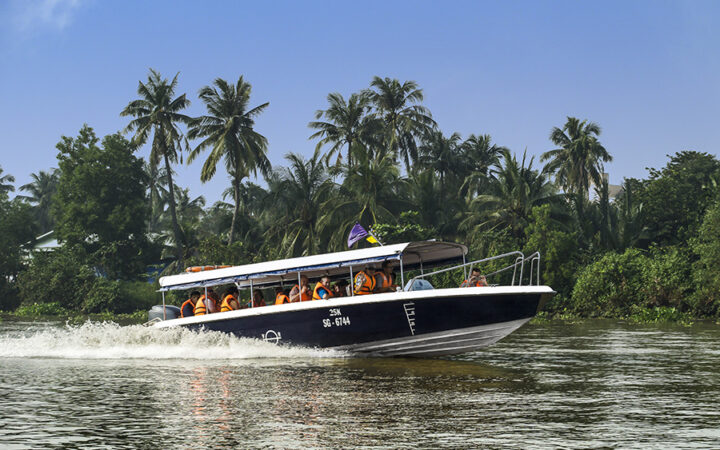
Yes. Every speedboat carries complete international-standard safety equipment, life jackets for all guests, and rain protection for any season. Although our boats hold up to 20, we carry a maximum of 14–15 guests so everyone travels comfortably and safely.
Are your tours suitable for children and families?
Absolutely. Our tours suit all ages, with child-sized life jackets on board and a relaxed small-group pace that works well for families. Children under 12 must be accompanied by an adult — just let us know the ages when you book so we can prepare.
Can you cater to vegetarian or other dietary needs?
Yes. We’re happy to arrange vegetarian and other special diets, just note your requirements in the booking form.
Are your tours suitable for older travellers or those who aren't very fit?
Yes. Our tours are comfortable for guests roughly aged 7 to 70. The speedboat does most of the travelling, walking is gentle and broken up with rest stops, and our guides are always on hand to help.
What languages do your guides speak?
All of our guides are fluent in English. Guides in other languages can often be arranged in advance for an additional fee ,just ask when you book.
Can I book a private or customised tour?
Yes. Many of our experiences can be run privately or tailored to your group, dates and interests. Contact us with what you have in mind and we’ll put a plan together.
Can Gio
What should I bring?
Sunscreen, a hat, sunglasses, comfortable clothing and your camera. We provide drinking water, refreshments, insect repellent, waterproof ponchos and umbrellas, so you can travel light.
How long does it take to reach Can Gio by speedboat?
About 1 hour 20 minutes by speedboat to the Can Gio mangrove forest, around 40km from the city.
Will we see wildlife in Can Gio?
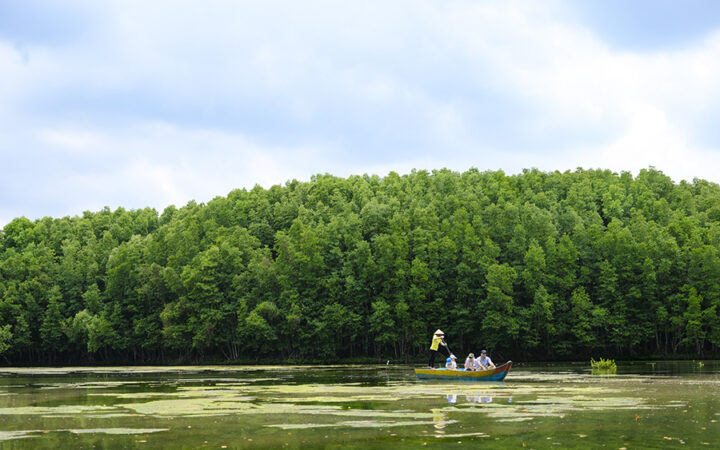
Very likely. Can Gio is a UNESCO Biosphere Reserve home to monkeys, bats, crocodiles and abundant birdlife. Sightings vary with the tides and the season, and our guides know where to look.
Cu Chi Tunnels
What should I bring?
Sunscreen, a hat, sunglasses, comfortable clothing and your camera. We provide drinking water, refreshments, insect repellent, waterproof ponchos and umbrellas, so you can travel light.
How long does it take to reach the Cu Chi Tunnels by speedboat?
About 1 hour 20 minutes along the Saigon River. The boat pauses at a few points along the way for your guide to share stories of riverside life and because we set off early, you arrive ahead of the buses groups.
I'm claustrophobic — do I have to go inside the tunnels?
Not at all. The tunnels have been widened but can still feel tight, so going underground is completely optional and only a small part of the day. Your guide will look after you, and there’s plenty to see above ground.
How much walking is there at the Cu Chi Tunnels?
Around 600–700m in total across the site, at an easy pace with rest stops along the way.
Which tunnels do you visit — Ben Dinh or Ben Duoc?
Our tours visit Ben Dinh, with the exception of the boat-and-bicycle option, which goes to Ben Duoc. We can also arrange Ben Duoc on a private tour by request.
Is the shooting range included?
The entrance fee to Cu Chi is already included in your tour price. The optional shooting range is not if you’d like to try it, it’s about 75,000 VND (around $3) per bullet, paid on the day.
How much is the entrance fee to the Cu Chi Tunnels?
As of 2026, a ticket costs 135,000 VND for international visitors and 35,000 VND for Vietnamese nationals. The international ticket includes a guide from the site’s own staff, but most of these guides speak limited English, so the commentary is basic. The shooting range and food are paid separately, and prices are set by the site, so they can change. On a Les Rives tour the ticket is already included.
What are the opening hours of the Cu Chi Tunnels?
The site is open every day from 7:00 am to 5:00 pm. It is quietest in the first hour after opening and late in the afternoon. From mid-morning it fills with school groups and coach tours, and weekends and Vietnamese public holidays are the busiest days.
How far are the Cu Chi Tunnels from Ho Chi Minh City?
Ben Dinh, the site most visitors see, is about 70 kilometres by road from the city centre, to the north-west along the Saigon River. Ben Duoc lies further out. The road is heavily congested, so the drive usually takes 2 to 3 hours each way. By speedboat up the river the trip takes about 1 hour 20 minutes.
How do I get to the Cu Chi Tunnels from Saigon?
There are four ways. A speedboat up the Saigon River takes about 1 hour 20 minutes from the city centre and avoids road traffic. A coach or minibus tour goes by road through the northern suburbs, usually 2 to 3 hours each way. A taxi, Grab or private car takes you door to door on the same congested roads. Public bus 13 runs from the Ben Thanh area to Cu Chi bus station, where route 63 continues to Ben Dinh and route 79 to Ben Duoc. It is the cheapest option and by far the slowest.
How long do you need at the Cu Chi Tunnels?
Plan on 2 to 3 hours at the site, depending on the group and how much the guide covers. That includes roughly 600 to 700 metres of walking at an easy pace, with stops at trapdoors, booby-trap displays, a restored command room, the underground kitchen and a stretch of tunnel you can crawl. Add the journey from Saigon: about 1 hour 20 minutes each way by speedboat, or 2 to 3 hours each way by road.
Should I visit Ben Dinh or Ben Duoc?
Choose Ben Dinh for the easier trip: it is the closer of the two sites, better set up for visitors, and its tunnels are widened so adults can move through them. Choose Ben Duoc for fewer crowds, tunnels nearer their original size and the memorial temple, whose walls carry 45,666 names. Les Rives group tours visit Ben Dinh, the speedboat-and-bicycle tour visits Ben Duoc, and private tours can go to Ben Duoc on request.
Are the Cu Chi Tunnels worth visiting?
For most visitors interested in the history of the Vietnam War, Cu Chi offers something that photographs and diagrams cannot easily convey: the scale of the underground network and the conditions in which people lived and operated beneath the ground. It is a well-developed historic attraction rather than an untouched battlefield, and the shooting range can be heard across parts of the site. Visiting early in the morning, or choosing the quieter Ben Duoc site, makes for a calmer experience.
Do I have to go into the tunnels if I am claustrophobic?
No. Going underground is optional, and there is plenty to see above ground. The tunnels open to visitors have been widened but are still low, dark and warm, so you move bent over or crouching, and some stretches are narrow. If you are claustrophobic, you can watch from the entrance and skip the crawl entirely.
Is the shooting range included in the ticket?
No. The shooting range at Cu Chi is optional and paid separately on the day. As of 2026 bullets cost 75,000 VND each, with a minimum of 10 per person (750,000 VND), payable in cash or by credit card. Shooters must be at least 18 years old.
Are the tunnels suitable for children?
For most children, yes. Much of the visit takes place above ground, the walking is relatively easy, and going into the tunnels is optional. The main things to consider are the heat and the shooting range, which can be loud enough to unsettle younger children. Bring water, sun protection and comfortable shoes, and children should remain with an adult throughout the visit.
Is it safe to visit the Cu Chi Tunnels?
Yes. Both Ben Dinh and Ben Duoc are managed historic sites with established visitor routes and staff on the grounds. The main practical considerations are heat and humidity, uneven or muddy paths after rain, low ceilings underground and the confined nature of the tunnels. If you have limited mobility or heart, respiratory or claustrophobia concerns, you can simply skip the tunnel crawl and remain above ground.
What should I wear to Cu Chi?
Light, breathable clothes you do not mind getting dusty, and closed shoes with good grip, because the paths turn muddy after rain. Bring a hat, sunscreen and insect repellent, since much of the site is shaded forest.
Is there food at the site?
Yes, although the options differ between the two sites. Drinks, snacks and simple food are available around the tunnel complexes, and Ben Duoc also has a restaurant. If you are visiting with Les Rives, you do not need to plan around the food available at the site: lunch is already included in the itinerary.
When is the best time of year to visit Cu Chi?
The dry season, roughly December to April, generally brings the most comfortable conditions for walking around the site. During the rainy season, from around May to November, showers are more frequent and the paths can become muddy. Rain often comes in short, heavy bursts rather than lasting all day, so there is no need to avoid Cu Chi during the wet season. An early visit also has the advantage of cooler temperatures and fewer crowds.
Are the Cu Chi Tunnels real?
Yes. The Cu Chi tunnel network was dug and expanded over decades and used during both the war against the French and the Vietnam War. The sites visitors see today have been preserved, restored and adapted for public access. Some tunnel sections at Ben Dinh have been widened to make them easier to enter, while Ben Duoc retains more of the original underground complex. What you visit is a preserved historic site, not an untouched wartime ruin.
Did people live in the tunnels?
Yes. Fighters and villagers sheltered underground through bombing raids and ground sweeps. The network held sleeping quarters, meeting rooms, field hospitals, wells and kitchens, where the Hoàng Cầm stove vented smoke far from the fire so it would not give away an entrance. Conditions were hot, dark and cramped, and disease was common.
What are the Cu Chi Tunnels?
The Cu Chi Tunnels are a network of hand-dug underground passages on the north-western edge of Ho Chi Minh City. Resistance fighters used them against the French from 1948, and against the United States and South Vietnam during the Vietnam War. Vietnamese sources put the network at more than 200 kilometres at its height, with about 120 kilometres surviving. Two sections, Ben Dinh and Ben Duoc, are open to visitors.
Which Cu Chi Tunnels tour should I choose?
Every Les Rives tour to Cu Chi goes by speedboat, so the real choice is how much of the day you want to give it. A half-day covers the tunnels and has you back in the city by early afternoon, and it is what most visitors choose. A full day pairs Cu Chi with the Mekong Delta, the Cao Dai Temple, the countryside around the tunnels, or the quieter side of Ho Chi Minh City. Group departures stay small and run to a fixed timetable; a private tour sets its own pace, starts when you like, and can take you to Ben Duoc, the quieter of the two tunnel sites. On all of them the entrance ticket, your guide, lunch and hotel pickup are included.
Mekong Delta
Are there proper toilets, food stops, and any forced shopping?
Yes. We include comfortable restroom breaks throughout the day. And no, there are no forced shopping stops or commission-based detours. Every moment is dedicated to discovering the authentic Mekong Delta, not gift shops.
What should I bring?
Sunscreen, a hat, sunglasses, comfortable clothing and your camera. We provide drinking water, refreshments, insect repellent, waterproof ponchos and umbrellas, so you can travel light.
How long does it take to reach the Mekong Delta by speedboat?
About 1 hour 20 minutes by speedboat, far quicker and more scenic than the road, which is why the day never feels rushed.
What will we see and do in the Mekong Delta?
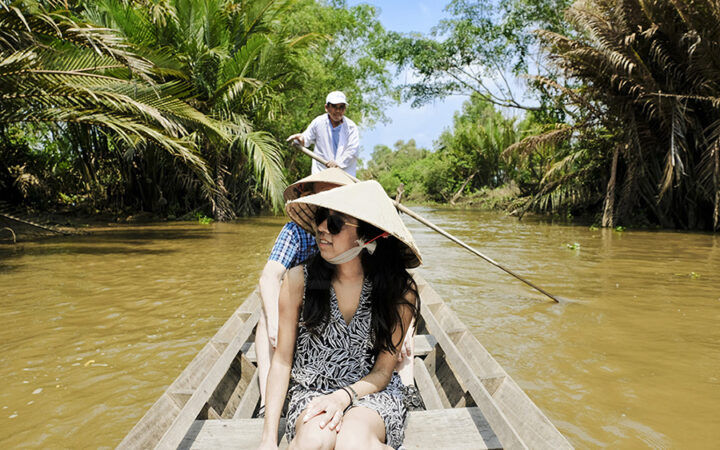
A full, relaxed day: a fruit orchard, a riverside market, a traditional rowboat through the canals, a Buddhist pagoda and a Cao Dai temple, and a local farmhouse for coconut-candy and rice-whisky tasting, finishing with a traditional lunch featuring the region’s famous fried elephant-ear fish.
Saigon River
What will I see on the Saigon River tour?
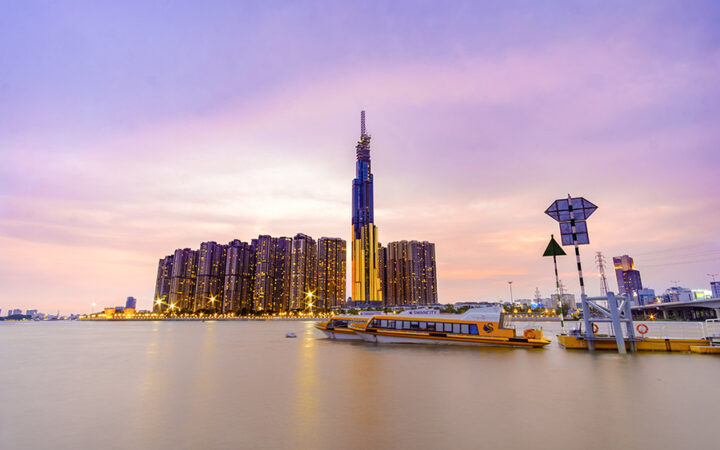
A relaxed cruise past the city’s riverside life and skyline, with your guide sharing the stories behind what you pass. Get in touch and we’ll walk you through the current route and timings.
Vung Tau
How do you get from Ho Chi Minh City to Vung Tau?
Vung Tau sits about 100 kilometres southeast of Saigon, and there are three ways across: by road (roughly two hours by car), by the public fast ferry, or, most memorably, by private speedboat down the Saigon River and out to sea. Our Vung Tau by Speedboat tour takes the water route, which turns the transfer itself into part of the day.
Is Vung Tau worth visiting as a day trip from Saigon?
Yes, particularly if you want sea air, a genuine coastal town and a change of pace without a long journey. In a single day you can see the Christ statue, the old lighthouse, the White Palace and a real fishing market, then swim at Back Beach and eat superb seafood, all within a compact peninsula.
What are the best things to do in Vung Tau in one day?
Climb to the Christ of Vung Tau statue and the 1862 lighthouse on Small Mountain, visit the colonial White Palace and the Thich Ca Phat Dai temple, browse the Xom Luoi fish market, and relax on Back Beach. Round it off with banh khot and fresh seafood at a seaside restaurant.
When is the best time to visit Vung Tau?
The dry season, from about November to April, brings the calmest seas and clearest skies, ideal for the boat crossing and the beach. Midweek is noticeably quieter than weekends, when Vung Tau fills with visitors from Ho Chi Minh City.
What are the beaches in Vung Tau like?
Back Beach (Bai Sau) is the long one, nearly ten kilometres of open golden sand and the best choice for swimming. Front Beach (Bai Truoc) is the town-side promenade for sunsets and evening strolls, and small Pineapple Beach (Bai Dua) has the clearest water for a quiet dip.
Still have a question?
Our team is happy to help you plan the perfect journey.